Introduction
International subscriptions are part of everyday digital life for many Nigerians. Streaming platforms, music services, cloud storage, learning tools and professional software often charge recurring fees, sometimes in a foreign currency. The challenge is not only making the first payment. It is being ready when the next renewal arrives.
A payment can fail because a card is inactive, the available balance is insufficient, a card limit has been reached or the merchant does not accept the payment method. A little preparation can help you identify these issues before a renewal date.
1. Keep a clear list of your active subscriptions
Create one list of every service that charges you regularly. Include entertainment, work tools, learning platforms and storage services. Record the plan, amount, billing currency, renewal date and payment method. This gives you a single view of your recurring commitments and helps you notice services you no longer need. A useful way to stay organised is keeping track of recurring digital expenses.
2. Check your payment balance ahead of time
Do not wait until the renewal date to check whether your payment method is ready. Review the available balance a few days before the expected charge. If you use a virtual USD card, check that it is active and that the available balance can cover the expected charge. A card does not automatically guarantee acceptance by every merchant.
3. Understand the currency and total cost
A subscription priced in USD does not have a permanently fixed naira cost. The naira amount can change with the exchange rate and any applicable fees. Check the currency shown by the merchant and understand the conversion details before funding or paying. Compare plans using their billing currency and renewal frequency, not only the headline price.
4. Set reminders before renewal
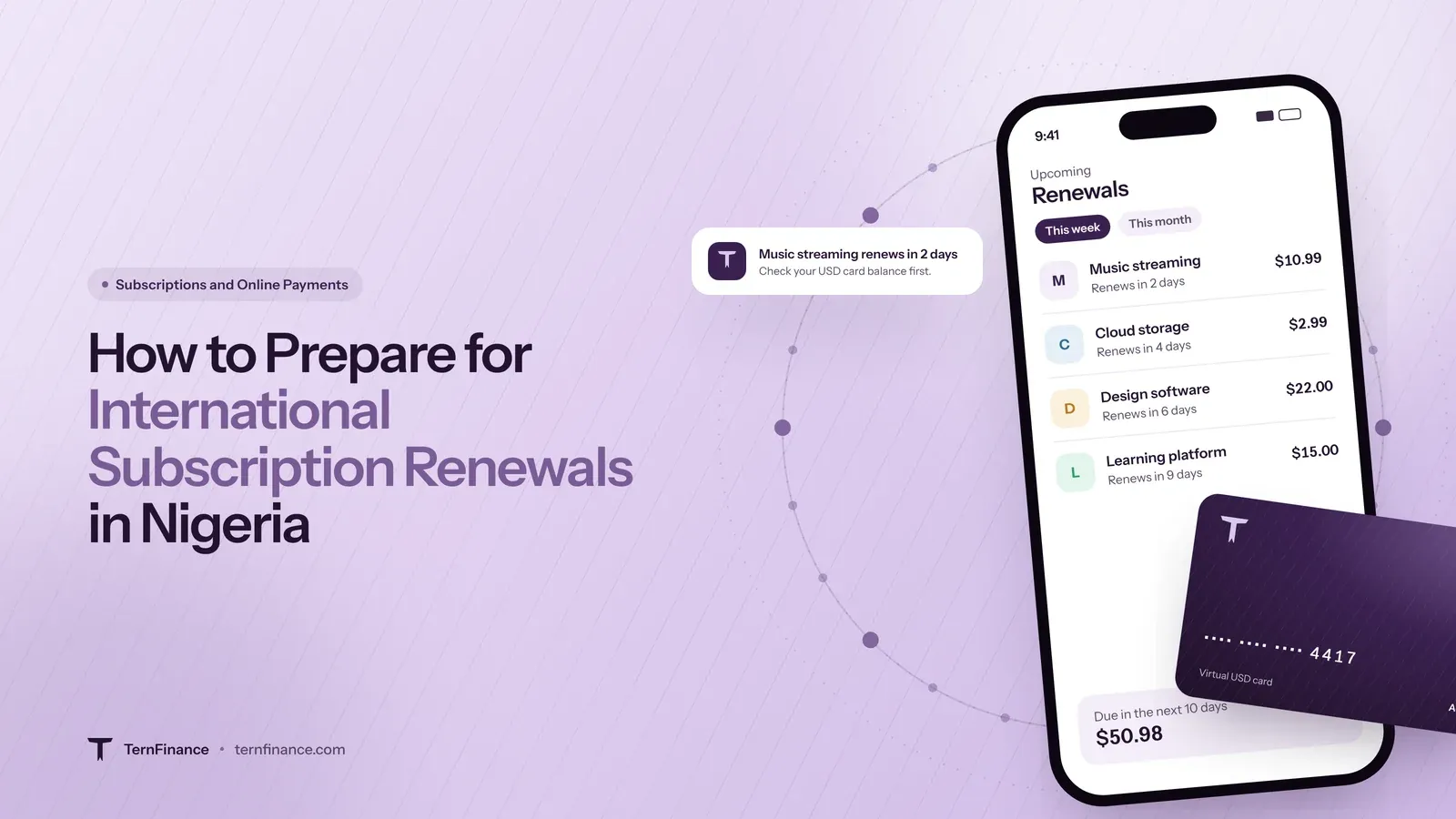
A reminder gives you time to decide whether to keep the service, prepare funds or update a payment method. Set a prompt several days before renewal. Where your financial app supports balance-aware reminders for scheduled debits or USD-card subscriptions, use them as an additional prompt, while still checking the merchant's billing terms.
5. Review your subscriptions every month
A monthly review helps identify forgotten trials, duplicate services and tools you no longer use. Check the last payment date, current plan and whether the service still provides value. If you decide to stop using a service, follow the merchant's cancellation process and confirm the subscription status.
6. Build subscription costs into your budget
Group recurring services by purpose, such as entertainment, work, education and storage. Estimate the monthly cost and identify annual renewals separately. Revisit your plan when prices, usage or exchange rates change. This makes digital subscriptions easier to plan for rather than treating each charge as a surprise.
Build a renewal calendar that works for you
Once you have listed your subscriptions, turn the list into a calendar. A calendar gives you a forward view of payment dates rather than forcing you to react to individual merchant emails. You can use a spreadsheet, a calendar application or a personal finance tool. The important thing is to keep the information current and review it regularly. If a renewal is declined, the guide on what to check when an online subscription payment fails.
For each renewal, record both the date and the amount in the currency charged by the merchant. If a service bills annually, mark the renewal well in advance because the payment may be significantly larger than a normal monthly charge. If the merchant offers a billing history or upcoming invoice page, use it as the source for the next expected charge. These checks can be brought together in a monthly review for digital subscriptions and online tools.
Where you manage several services, group renewals by week. This can reveal when multiple charges are likely to happen close together. You can then plan your funding needs around the dates rather than discovering several payments at once.
What to do in the week before a renewal
The week before a renewal is a useful point to check whether the service is still needed and whether the payment method is ready. Start by reviewing the merchant's account page. Confirm that the plan is active, the renewal date has not changed and the expected price is still the same.
Next, check the payment method. If you use a virtual USD card, review its status and available balance. Also check whether you have changed the card, frozen it or adjusted a limit since the previous billing cycle. These small checks can prevent avoidable disruption. For card-specific checks, including merchant acceptance, balance and limits, see what to check before using a virtual USD card.
If the service is no longer useful, follow the merchant's cancellation process before the renewal date. Do not assume that deleting an app or removing a payment card automatically cancels a subscription. Look for a cancellation confirmation and retain it for your records.
Common renewal-planning mistakes to avoid
One common mistake is budgeting only for the first payment. A promotional price or introductory period may not be the amount charged at the next renewal. Review the plan terms and the next invoice rather than assuming the initial amount will continue.
Another mistake is relying on the balance that was available when you first subscribed. Your available funds may have changed because of other purchases, transfers or card transactions. Check again before the renewal.
A third mistake is overlooking annual renewals. A service that appears inexpensive when viewed monthly may create a much larger charge when billed once a year. Record the actual billing frequency and prepare for the full amount.
To make the process repeatable, set one monthly date to review all subscriptions. Use that review to update renewal dates, confirm balances, identify price changes and remove services you no longer use.
Conclusion
Preparing for international subscription renewals is a simple habit: know what you use, when it renews, what currency it charges and whether your payment method is ready. Tern Finance helps individuals manage money across Naira and USD, with multi-currency wallets, virtual USD cards and balance-aware reminders for scheduled debits and USD-card subscriptions. Your subscriptions should work around your life, not catch you by surprise.